Getting Started
Softwood vs Hardwood: Choosing the Right Board
Learn the real difference between softwood and hardwood, which species suit beginners, and how to pick the right board for your next woodworking project.
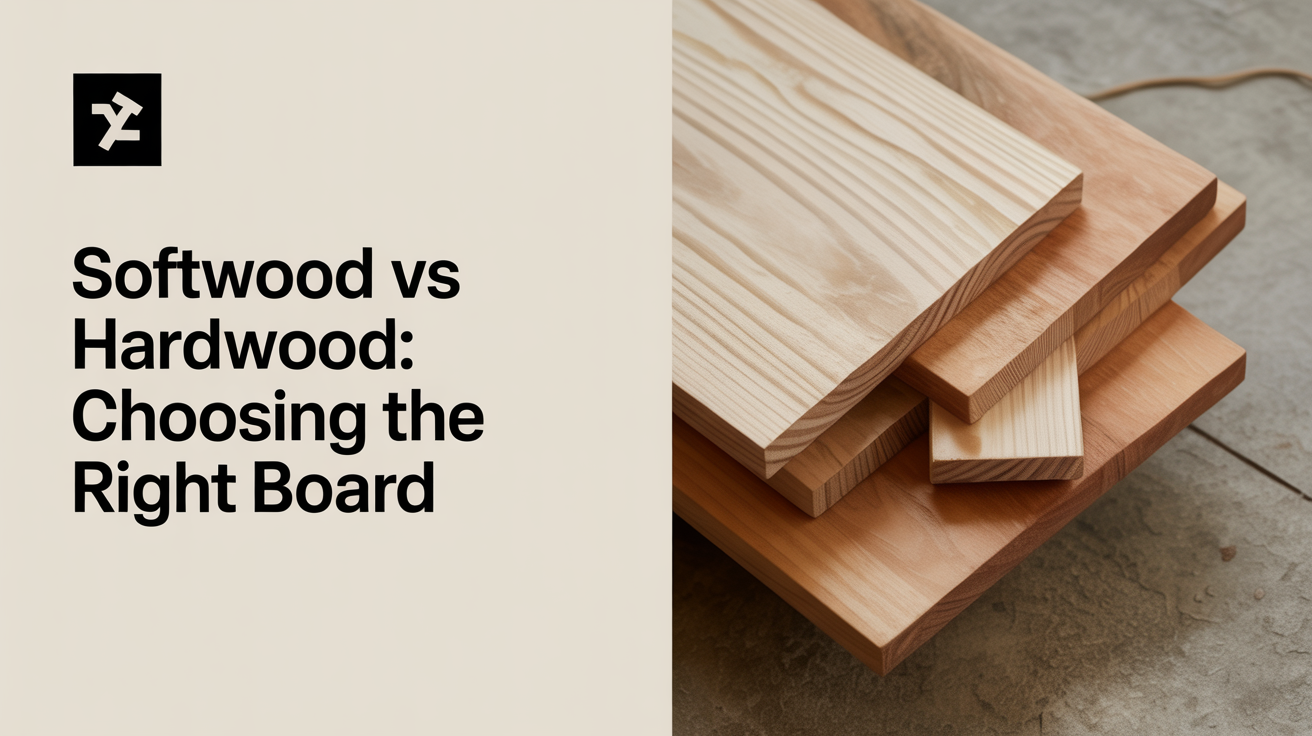
For most beginner projects, pine or poplar will do the job just fine -- and they cost a fraction of what oak or walnut runs at the lumber yard. Here is how to think through the choice so you buy the right board the first time.
What "Softwood" and "Hardwood" Actually Mean
The terms can be misleading. Botanically, softwoods come from conifer trees (pine, spruce, fir, cedar) and hardwoods come from deciduous trees (oak, maple, walnut, cherry). But the botanical split does not perfectly track how hard or soft the wood feels under a chisel.
Balsa is technically a hardwood yet it crushes under light pressure. Douglas fir is technically a softwood yet it is dense enough to use for structural framing. The botanical labels stuck because they are useful shorthand most of the time, but do not treat them as a guarantee of hardness.
What actually matters for your bench:
- Density and hardness -- how the wood holds an edge, resists denting, and takes joinery
- Grain tightness -- how fine and consistent the surface looks after planing and sanding
- Workability -- how easy it is to cut, shape, and glue
- Cost and availability -- what you can actually buy at your local home center or lumber yard
Common Softwoods for Beginners
Softwoods are widely available, relatively inexpensive, and easier to cut and shape with basic tools. That makes them a practical starting point.
Pine
Construction-grade pine (SPF -- spruce, pine, fir) is sold at every home center and is often the cheapest solid wood option. It cuts and sands readily, holds screws reasonably well when you pre-drill, and takes paint well. The downside is that it dents. A sharp corner or a dropped tool will leave a mark, and the grain can look blotchy under stain.
For paint-grade work -- shelves, small cabinets, workshop fixtures -- pine is hard to beat on cost. If you want a natural finish, look for clear pine (sometimes labeled select or premium) rather than the knotty construction boards. Knots can telegraph through paint and are prone to bleeding sap over time.
Poplar
Poplar sits right at the boundary between soft and hard. It machines cleanly, holds screws well, glues without fuss, and takes paint beautifully. Many furniture makers use it for drawer boxes, cabinet carcasses, and parts that will be painted rather than stained. It is usually a step up in price from construction pine but still affordable at most hardwood dealers. If you want a wood that behaves like a hardwood without the hardwood price, poplar is worth trying.
Cedar and Fir
Western red cedar is soft, light, and naturally resistant to rot -- ideal for outdoor projects like garden furniture or planters. Fir is stiffer than pine and holds fasteners well, but it can be splintery if you work it with dull tools. Both are worth knowing about but are more specialized than pine or poplar for a beginner's first few projects.
Common Hardwoods for Beginners
Hardwoods take more effort to cut and shape but reward that effort with density, fine grain, and durability. If you are building something you want to last -- a small box, a workbench top, a set of shelves -- hardwood is worth the extra cost and the sharper tools.
Oak
Red oak is one of the most widely available domestic hardwoods and is sold at many home centers alongside the softwoods. It has an open, coarse grain that is distinctive and attractive. It takes stain well and holds joinery reliably. The downside for hand-tool work is that the open grain can feel rough off the plane and requires grain filler before finishing if you want a glassy surface. White oak is harder and more stable, with a tighter ray pattern, but costs more and is less commonly stocked.
Maple
Hard maple is one of the densest domestic hardwoods. It machines very cleanly, leaving surfaces that need minimal sanding, and it holds up to heavy use. That density does mean your saw and chisel need to be sharp. Soft maple (a different species despite the name) is less hard but still workable and more affordable. Both take finish well, though hard maple can blotch under oil-based stains unless you use a conditioner first.
Walnut
Walnut is the species most woodworkers eventually gravitate toward. The rich chocolate-brown color, the straight grain, and the way it works with both hand tools and machines make it consistently pleasant. It is also relatively light for a hardwood. The catch is cost -- walnut boards run significantly more than oak or maple, so it is worth building some experience before committing to a walnut project.
Cherry
Cherry is slightly softer than maple but still dense enough for furniture. It starts out a pale pink and darkens beautifully to a warm reddish-brown over a few months of light exposure. It machines cleanly and is forgiving with hand tools. Like walnut, it carries a price premium.
Softwood vs Hardwood: Side-by-Side
| Property | Softwood (e.g., Pine) | Hardwood (e.g., Oak, Maple) |
|---|---|---|
| Cost | Lower | Higher |
| Home center availability | Very common | Varies; hardwood dealers more reliable |
| Ease of cutting | Easier | Requires sharper tools |
| Dent resistance | Lower | Higher |
| Best finish | Paint | Paint or clear finish |
| Good for beginners? | Yes -- paint-grade work | Yes -- once tools are sharp |
| Typical projects | Shelves, shop fixtures, painted furniture | Boxes, furniture, cutting boards |
How to Choose the Right Board for Your Project
The right wood depends on three things: how the piece will be used, how it will be finished, and your budget.
Will it be painted or stained? If you are painting, poplar and pine are excellent choices. They hold paint well and cost far less than hardwood. If you want a natural or clear finish that shows the grain, choose a hardwood with a consistent figure, or at least a clear-grade softwood with no knots.
Will it take abuse? A workbench top, a cutting board, or a toy will get banged and scraped. Hardwood holds up better in those situations. A display shelf or a picture frame does not need to be hard maple.
What can you get locally? Species availability varies by region. In much of North America, red oak, hard maple, and poplar are easy to find at hardwood dealers. Specialty species like cherry, walnut, or figured maple may require a trip to a dedicated lumber yard or an online order with shipping costs. Buying local also lets you inspect boards for knots, warps, and checks before you pay.
What are your tools? Dull blades and chisels make hardwood difficult and dangerous. If you are building your first tool kit, make sure you have a way to sharpen your edge tools before taking on a dense species like hard maple or white oak. Sharp tools make hardwood a pleasure; dull tools make it a frustration.
One practical approach: start your first project or two with poplar or clear pine. Get comfortable with the workflow, practice your joinery, and see what finish you like. Then move up to a hardwood for the third or fourth project once the process feels familiar. That is the same path most woodworkers take, and it lets you spend the hardwood budget on a project you are confident finishing. If you are still figuring out the basics, starting with a structured beginner plan can save you from buying the wrong material twice.
Storage matters too. If you are setting up a small workshop, keep lumber off concrete floors and away from exterior walls where humidity fluctuates. Wood acclimates to its environment, and a board that sat in a damp garage can warp once it dries out in a heated shop.
Frequently Asked Questions
Is pine good enough for furniture? Yes, with realistic expectations. Paint-grade pine furniture is perfectly durable for everyday use. Pine dents more easily than hardwood, so it is not ideal for a dining table that will see hard knocks. For bookshelves, painted cabinets, or children's furniture, pine works well and saves money.
What is the best wood for a first project? Poplar or clear pine for a paint-grade project. Red oak or soft maple if you want a natural finish. Both are forgiving, widely available, and reasonably priced. Avoid figured or rare species until you have a few projects behind you.
Do I need special tools to work hardwood? The same tools work for both softwood and hardwood, but sharpness matters more with hardwood. A sharp hand saw and sharp chisels make hardwood almost as easy to cut as pine. Dull tools that scrape by on softwood will bind, chatter, and burn on dense hardwood.
Why does hardwood cost more? Hardwood trees grow more slowly, take longer to reach harvestable size, and are typically milled and dried more carefully than construction softwood. Specialty species with consistent color and grain command even higher prices. The cost difference is real but tends to be worth it for pieces you want to last a long time.
Can I mix softwood and hardwood in one project? Yes, and many furniture makers do. A common approach is to use poplar or pine for interior parts like drawer boxes and cabinet carcasses, then use hardwood for the visible faces and panels. The woods need to be dimensioned accurately to fit together, but there is no structural problem with mixing species in a single piece.