Hand Tools
Choosing Your First Set of Bench Chisels
A practical guide to buying your first bench chisels: sizes, steel types, handle materials, and why four chisels beat a ten-piece set.
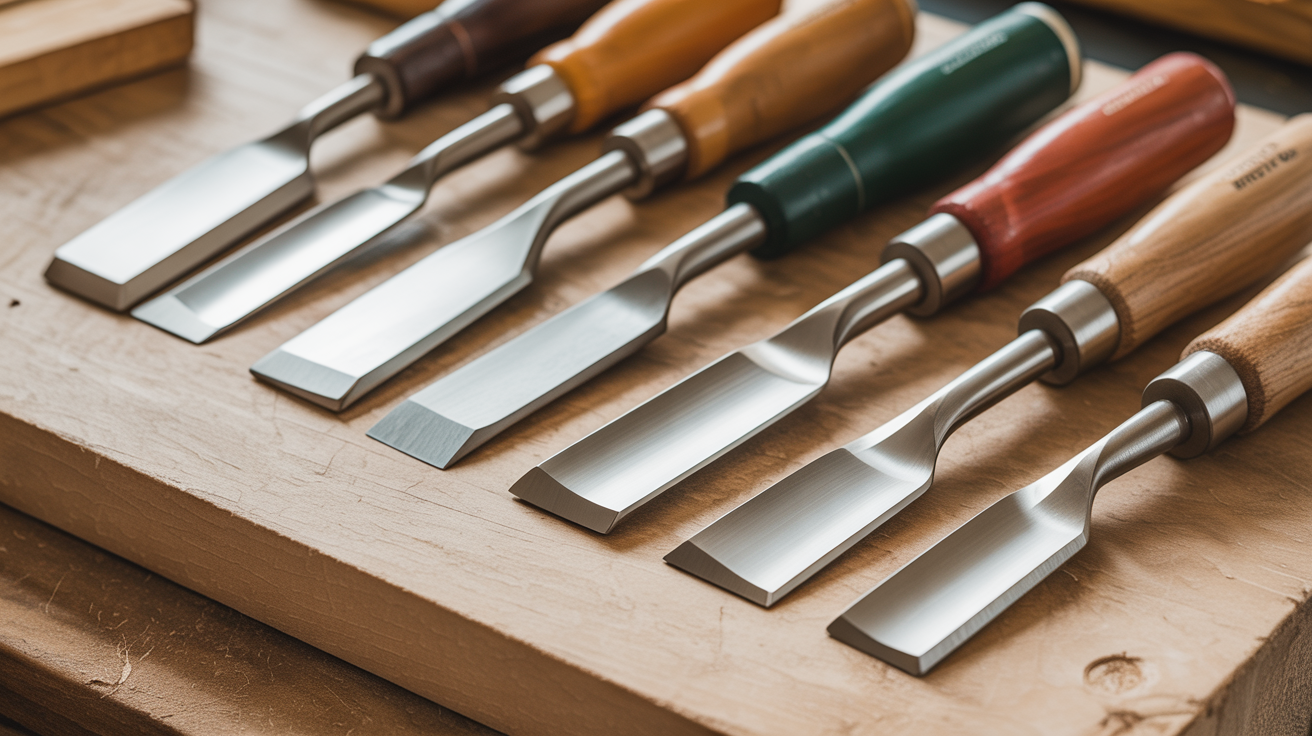
A sharp chisel is one of those tools that transforms woodworking from a fight into something that actually feels good. For beginners, the hardest part is figuring out which chisels to buy before you know enough to have strong opinions. This guide skips the brand debates and focuses on what actually matters for a first set.
Bevel-Edge Bench Chisels Are the Right Starting Point
There are many chisel types out there: mortise chisels, paring chisels, skew chisels, firmer chisels. You do not need any of those yet. Bevel-edge bench chisels are the ones with the angled flat sides, and they handle the majority of joinery work a beginner will encounter. The beveled sides let you reach into corners, chop out dovetail waste, clean up dadoes, and pare joints flush. They are versatile enough to be your only chisels for the first year or two.
Avoid sets labeled just "chisels" without specifying the type. They are often thicker firmer-style tools with square edges that limit how you can position them in tight spaces.
Chisel Sizes Explained: What to Actually Buy
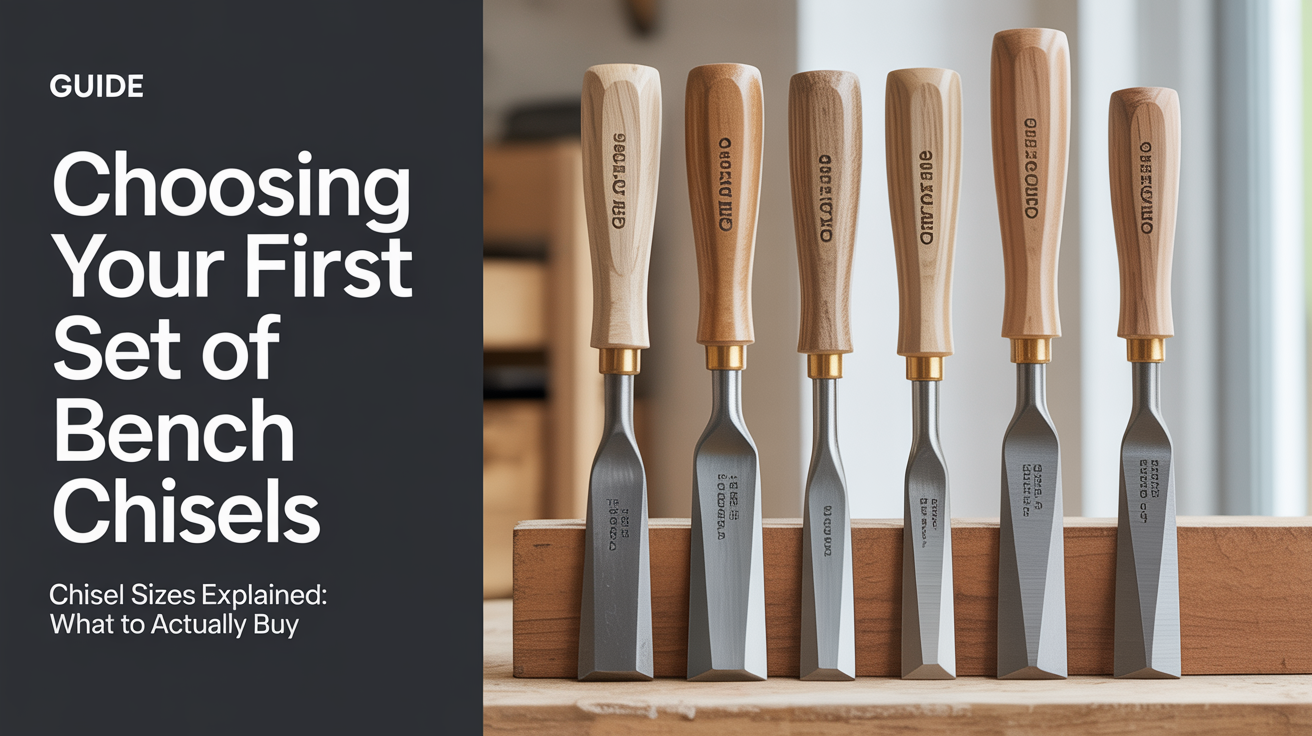
Four chisels cover nearly everything. A 10-piece set sounds appealing, but most of those sizes collect dust while you reach for the same two or three every time. Here are the four worth owning first:
| Width | Primary Uses |
|---|---|
| 1/4" | Cleaning up small mortises, detailed joinery, tight corners |
| 1/2" | General-purpose chopping, paring, dovetail waste removal |
| 3/4" | Wider dadoes, smoothing broad surfaces, fitting hardware |
| 1" | Paring large tenon shoulders, cleaning up wide housings |
The 1/2" gets used most. The 1/4" handles fine work. The 3/4" and 1" come out for furniture-scale joinery. Once those four feel natural, adding a 3/8" or a 1-1/2" makes sense. Not before.
Steel Types and What They Mean in Practice
This is where beginners often get confused by marketing. Three steel types show up in most entry and mid-range chisels:
Chrome-vanadium (Cr-V) is common in budget sets. It sharpens easily and holds an adequate edge. The tradeoff is that the edge dulls faster than better steels. For a beginner still learning to sharpen, that might actually be fine since you are re-sharpening often anyway. Sharpening is a skill that takes repetition to build, so a chisel that needs frequent attention gives you more practice.
O1 tool steel is an oil-hardened carbon steel that sharpens beautifully and gets very keen. It is more reactive than alloy steels, meaning it can rust if left wet or oily, but a thin coat of camellia oil or paste wax prevents that. O1 chisels tend to reward careful sharpening with a finer edge than chrome-vanadium tools at similar hardness.
A2 tool steel is an air-hardened alloy that holds its edge longer than O1 before it needs touching up. The catch is that A2 is harder to sharpen when it does dull and does not get quite as sharp at the apex. Woodworkers who sharpen frequently often prefer O1; those who prioritize edge retention lean toward A2. Neither is wrong.
For a first set, either O1 or a quality chrome-vanadium will serve well. The difference between steel types matters less than how consistently you sharpen.
Handle Materials and Why They Matter More Than You Think
Handle comfort affects whether you actually enjoy using the tool, and the material matters for durability under mallet strikes.
Hardwood handles (ash, beech, hornbeam) are traditional and comfortable. They can split if struck hard without a steel hoop or ferrule at the top. Many quality chisels come with a leather washer or brass ferrule to absorb impact. Check that the handle is secured well to the socket or tang.
Plastic handles on quality chisels are not a compromise. Polypropylene handles are impact-resistant, impervious to moisture, and do not require the reinforcement that wood does. They can feel slightly cheaper but often outlast wooden handles in terms of pure durability.
Octagonal handles (common on Japanese-style chisels) prevent rolling off the bench, which is a feature that sounds minor until you have watched a chisel fall point-first onto concrete. Some Western chisels have a slight flat ground into the handle for the same reason.
A handle that is too short or too fat is fatiguing over a long session. If you can test before buying, grip the handle and notice whether your fingers sit naturally or feel cramped.
What to Look For When Buying
The spec sheet only tells part of the story. Here is what to actually evaluate:
- Flatness of the back. The back of a chisel must be flat (or hollow ground) so it registers properly and sharpens in a reasonable amount of time. A convex back means grinding, which is a project before the tool is usable.
- Hardness range. Reputable chisels publish Rockwell hardness (HRC). A range of 58 to 62 HRC is appropriate for bench chisels. Below that and the edge rolls quickly; above 64 and the tool becomes brittle.
- Handle attachment. Socket handles fit over a tapered socket and can be replaced. Tang handles attach via a spike driven into the handle, which is fine but slightly less repairable. Either works for most users.
- Square sides and consistent grind. Look down the length of the blade. Twist or a non-square grind means extra work flattening the back.
- Country of manufacture and QC reputation. Entry-level chisels from established brands with consistent reviews are safer than no-name sets, regardless of country.
Buying Used Chisels
Old chisels are worth considering. Tools made in the mid-20th century often used better steel than comparably priced modern options, and they can be found at estate sales and antique tool dealers for a fraction of the cost of new. The things to check: no cracks in the blade, handles that are still solid, and blades that have not been ground down to a stub. Pitting on the back requires lapping, which is extra initial work but not a disqualifier. A chisel with a flat back and a blade of reasonable length is a good find regardless of age.
Flea market chisels with unknown history are riskier. You may get a treasure or a tool that was heat-treated poorly. For beginners, starting with new chisels from a known source and adding old ones later as you learn to evaluate them is the lower-risk path.
Sharpening Is Inseparable From the Purchase Decision
The best chisel in the world is useless blunt, and most chisels ship in a state that ranges from "close" to "not sharp at all." Budget time to flatten the back and work through the grits before you use a new chisel for the first time. A simple, repeatable sharpening method matters more than which sharpening system you use.
Learning to sharpen a chisel also makes you better at maintaining other edge tools. A well-tuned hand plane and a sharp chisel solve most of the problems beginners run into with fitting and cleaning up joinery. Even saw work is cleaner when the chisel you use to clean up the baseline is properly sharp.
Frequently Asked Questions
How many chisels do I actually need to start?
Four is a practical number: 1/4", 1/2", 3/4", and 1". That range handles most joinery work without redundancy. A 10-piece set spreads the budget thin across sizes you rarely use.
Is O1 or A2 steel better for beginners?
Neither is clearly superior. O1 gets sharper and is easier to work on a strop; A2 holds its edge longer but takes more effort to sharpen from dull. Beginners who sharpen frequently may find O1 more rewarding. If you prefer to sharpen less often and touch up on a strop, A2 suits that habit.
Can I use any mallet with bench chisels?
A wooden or rubber mallet is standard. Dead-blow mallets work well. Steel hammers should not be used on wooden handles because they split them. If you have a plastic-handle chisel designed for mallet work, check the manufacturer's guidance since some are rated for heavier impact than others.
Do chisels come sharp from the factory?
Most do not. Entry and mid-range chisels typically need the back flattened and the bevel honed before they perform well. Higher-end chisels sometimes come closer to ready, but even then a few passes on a fine stone and strop improve the edge. Treat initial sharpening as part of the purchase.
Should I buy a set or individual chisels?
Sets are often better value than buying the same four chisels individually, provided the set is a quality one. The problem with large sets is paying for sizes you will not use for years. A four-piece set at a higher quality tier often beats a ten-piece set at the budget tier, both in value and in how the tools actually perform.