Hand Tools
Sharpening Chisels: A Simple, Repeatable Method
Learn how to sharpen chisels with a clear grit progression, honing guide, and stropping routine you can repeat every time you pick up a chisel.
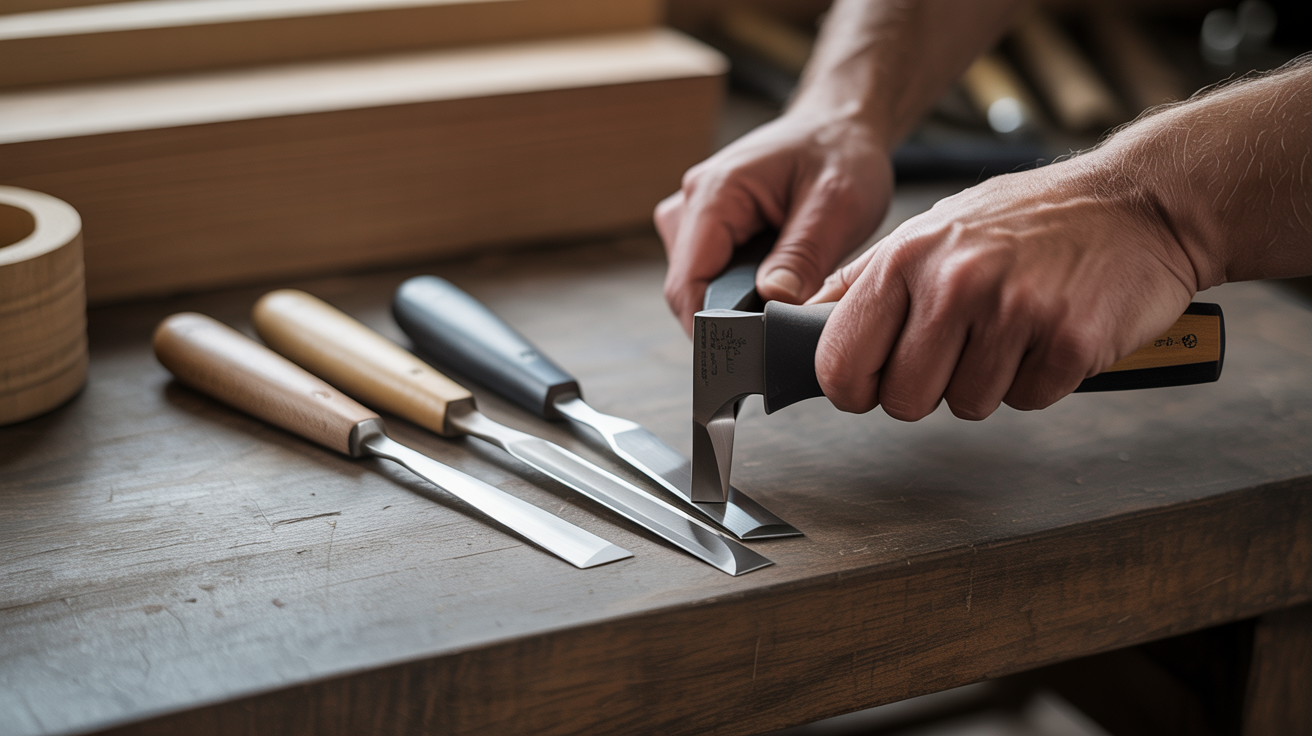
A dull chisel is one of those things that makes every task harder without ever announcing itself clearly. You just push harder, get rougher results, and assume the work is difficult. Getting sharp is the fix, and once you have a repeatable system, sharpening takes under five minutes and stops feeling like a chore.
How to Tell When a Chisel Needs Sharpening
Before building any habit, it helps to recognize what dull actually looks like in practice. The clearest sign is visual: hold the edge up to a light source and look straight at it. A sharp edge reflects nothing, because there is no surface to catch the light. A dull edge glints back at you with a thin bright line along the bevel. That tiny flat is where the steel has rolled or worn away.
The functional signs are just as clear. A sharp chisel registers cleanly in end grain with almost no downward pressure. A dull one skates, chatters, or tears the wood instead of slicing it. Paring across the grain should leave a polished surface. If it looks fuzzy or you are leaning into the handle, stop and sharpen.
Flattening the Back First
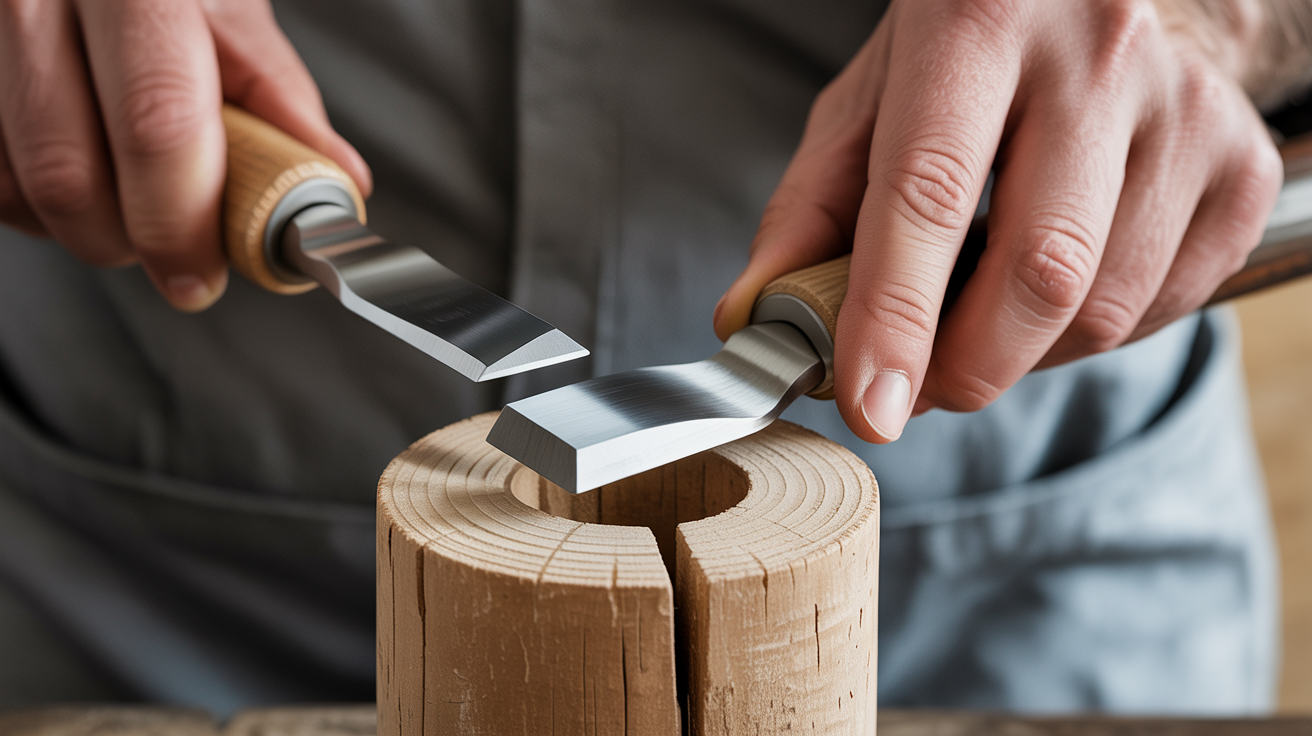
The back of a chisel (the flat face opposite the bevel) has to be genuinely flat and polished before the bevel matters at all. You can grind a perfect 25-degree bevel, but if the back is hollow or scratched, the intersection of those two surfaces cannot be truly sharp.
Start on your coarsest stone with the back lying completely flat, no rocking. Rub it in small circles or figure-eights, keeping the whole surface in contact. You are not removing much metal; you are polishing the first few millimeters behind the edge. Work through your grit sequence on the back, then move on. You only need to do this thoroughly once per chisel. After that, a few passes on the fine stone keeps it in shape.
Sharpening Systems: Stones, Plates, and Sandpaper
Three systems work well for beginners, each with real trade-offs.
| System | Grits Available | Water or Oil | Notes |
|---|---|---|---|
| Water stones (Japanese) | 1000 / 4000 / 8000 | Water | Cut fast, dish with use, need flattening |
| Diamond plates | 220 / 400 / 600 / 1200 | Dry or water | Stay flat, expensive, coarser finish |
| Sandpaper on glass (Scary Sharp) | Any | Dry | Cheap start, disposable, slow on hard steel |
| Oil stones (Arkansas) | Fine / Extra-fine | Honing oil | Long lifespan, slower cut, traditional |
For a beginner, a two-stone water stone setup (1000 and 4000 or 8000 grits) covers almost every situation. If you want dead-flat without maintenance, a set of diamond plates is hard to beat, though the cost adds up. The sandpaper-on-glass method, sometimes called Scary Sharp, works fine while you are getting started and gives you access to very fine grits cheaply.
The Bevel Geometry You Are Aiming For
Most bench chisels ship with a 25-degree primary bevel ground from the factory. That angle is a good starting point, but a small secondary bevel (a micro-bevel) ground at about 30 degrees is what you actually sharpen on a regular basis. The primary bevel is large and removing all of it on every sharpening session wastes time and steel. The micro-bevel is a thin sliver right at the cutting edge, and honing that sliver is what makes the chisel sharp.
A honing guide takes the guesswork out of holding the right angle. Set your chisel to the 25-degree mark for grinding the primary, then shift slightly to 30 degrees for the final honing passes. The guide rides along the stone and keeps the bevel consistent across the whole edge. Freehand sharpening works, but it takes months to develop reliable muscle memory. Starting with a guide builds the habit without that learning curve.
The Sharpening Routine, Step by Step
This sequence assumes you have a 1000-grit stone and an 8000-grit stone (or the sandpaper equivalent). A 4000-grit intermediate helps when a chisel is in rough shape but is not mandatory every time.
- Flatten the back. Five to ten strokes on the 1000-grit stone, whole back flat. Finish with a few passes on the 8000.
- Set the honing guide. Clamp the chisel at 30 degrees (micro-bevel) and lock it down.
- Hone on 1000 grit. Ten to fifteen strokes, applying light pressure on the forward stroke. You are cutting steel on the push.
- Check for a burr. Run your thumb pad (not tip) gently across the flat back near the edge. You should feel a thin wire of steel that has folded over to the back side. That burr means the 1000-grit is done.
- Move to 8000 grit. Ten strokes, lighter pressure. The scratch pattern becomes finer and the bevel starts to look polished.
- Remove the burr. Two or three flat passes on the 8000-grit stone with the back lying completely flat. No rocking.
- Strop. A piece of leather loaded with green compound, or just the back of a belt, works. Five to eight strokes per side, edge trailing (never leading into the strop).
- Test sharpness. Slice across a sheet of printer paper. A sharp chisel cuts cleanly with no tearing. On your forearm, it will shave hair without any dragging. Both tests work; the paper test keeps you from nicking yourself.
Once the micro-bevel is established, subsequent sharpenings skip step 2 and go straight to the 1000 grit. Most sessions are five minutes or less.
Keeping the Edge Longer
Sharpening frequency drops when you treat the edge with some care between uses. A few things that make a real difference:
Store chisels in a roll or rack so the edges do not contact each other or bounce in a drawer. Hitting the steel against another hard object rolls the edge even without visible damage. Keep a strop within reach and give the chisel a few passes before you start a session, not just when you notice it getting dull. Catching the edge early means you are honing, not regrinding.
Avoid chopping into dried glue, nails, or screws. It sounds obvious, but dried PVA is surprisingly abrasive. If you need to trim a joint, scrape the glue off first.
For more context on choosing tools to sharpen, our guide to selecting your first bench chisels covers what to look for in steel and grind geometry. And if you want to see how a sharp chisel interacts with a plane-flattened surface, how to use a hand plane without tearout picks up right where sharpening leaves off.
If you are working on joinery that mixes chisels with hand saws, how to use a hand saw for straight, clean cuts gives a solid foundation for the sawing side of that work.
Frequently Asked Questions
How often should I sharpen a chisel?
There is no fixed schedule. Sharpen when you notice the edge skipping off the wood or when the light-check shows that bright line at the edge. Light work in softwood might go an hour or more without needing a touch-up. Hard maple or dense end grain might need a strop after every few cuts.
Do I need all those grit stages, or can I skip from 1000 to 8000?
You can. For maintenance sharpening on a chisel that was already in good shape, going from 1000 directly to 8000 is fast and effective. The intermediate grits matter more when you are repairing a damaged edge or establishing a fresh bevel from scratch.
What is the difference between sharpening and honing?
Sharpening typically refers to removing enough metal to reshape the bevel, usually on coarser stones. Honing is the fine work at the end of the grit progression that refines the edge to a polished keenness. Stropping is sometimes listed separately, but it is essentially ultra-fine honing on a soft surface. In practice, most sessions are pure honing.
Can I sharpen chisels without a honing guide?
Yes, and many experienced woodworkers do. Freehand sharpening is faster once your hands know the angle, but getting there takes deliberate practice. A guide costs under twenty dollars and produces consistent results right away. Start with the guide, learn what a properly honed bevel looks and feels like, and go freehand later if you want to.
My chisel sharpens up fine but dulls almost immediately. What is wrong?
Usually one of two things: the micro-bevel angle is too shallow (under 25 degrees on hard steel the edge folds quickly under load), or the burr was not fully removed and what felt sharp was just the burr itself, which breaks off in the first few cuts. Check the angle and make sure the final few flat passes on the fine stone actually removed the wire edge.