Projects & Plans
How to Build a Sturdy Workbench
Build a solid 2x4 garage workbench with a plywood top. Beginner-friendly plans with cut list, step-by-step build, and tips to stop wobble.
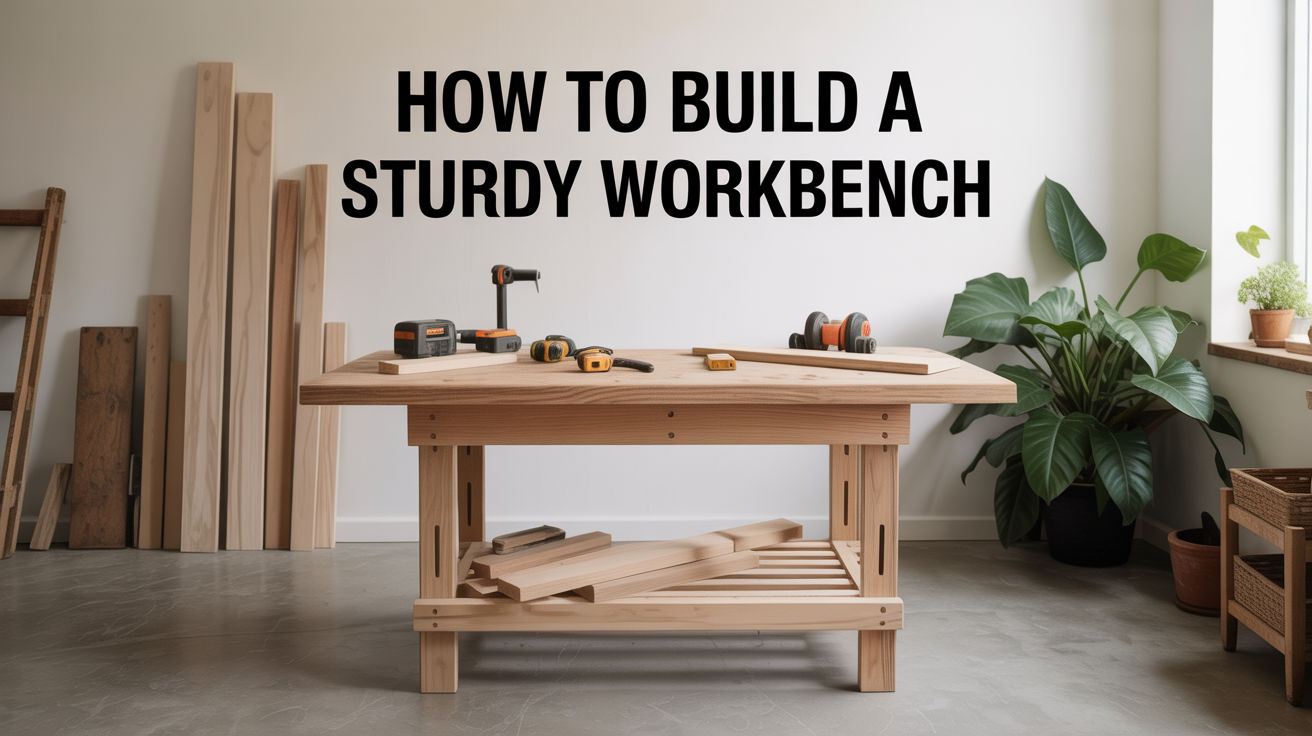
A good workbench is the single best upgrade you can make to a home shop. Without one, you're fighting your projects on a folding table that flexes, a floor that wrecks your knees, or a sawhorse setup that tips the moment you reach for a chisel. This guide walks through building a classic 2x4 frame bench with a double-layer plywood top, sized for a standard garage wall and scaled for a first-time builder.
The design is deliberately simple: no fancy joinery, no special hardware beyond lag screws and carriage bolts, and all the lumber from a single hardware store trip. You can build this in a weekend with basic tools.
Tools and Materials
Tools
- Circular saw or miter saw
- Drill/driver
- Countersink bit
- Socket wrench or adjustable wrench
- Tape measure and square
- Clamps (4 minimum)
- Level
Materials
| Item | Qty | Notes |
|---|---|---|
| 2x4x8 framing lumber | 14 boards | Douglas fir or Southern yellow pine; avoid badly bowed boards |
| 3/4" plywood or MDF | 2 sheets | Top layer; MDF is flatter but heavier |
| 3/8" carriage bolts, 3.5" long | 16 | With nuts and washers, for leg assemblies |
| 3" construction screws | 1 lb box | Structural screws (GRK or equivalent), not drywall screws |
| 3/8" lag screws, 3" long | 8 | For attaching the aprons to the legs |
| Leveling feet (adjustable glides) | 4 | Optional but worth it on uneven concrete |
| Wood glue | 1 bottle | Titebond II or similar |
Total estimated cost: $120 to $180 depending on lumber prices in your area.
Cut List
| Part | Qty | Dimensions |
|---|---|---|
| Legs | 4 | 1.5" x 3.5" x 33.25" (2x4, cut to height) |
| Long aprons (front and back) | 4 | 1.5" x 3.5" x 57" |
| Short aprons (left and right ends) | 4 | 1.5" x 3.5" x 21" |
| Lower shelf supports | 2 | 1.5" x 3.5" x 57" |
| Lower shelf cross-braces | 2 | 1.5" x 3.5" x 21" |
| Top layer 1 (plywood) | 1 | 3/4" x 24" x 60" |
| Top layer 2 (plywood or MDF) | 1 | 3/4" x 24" x 60" |
Assembled dimensions: 60" wide x 24" deep x 34.25" tall (with double 3/4" top). Adjust leg length if you need a different height. A comfortable working height sits right around elbow height when you're standing, which for most people lands between 34" and 36".
Build Steps
1. Cut all your lumber first.
Mill everything to length before assembly. Stack like pieces together and check for bad crowns or twists. A slightly bowed board used for a leg will telegraph into the whole bench. Set the bad ones aside for blocking or shorter parts.
2. Build the two end frames.
Each end frame is a rectangle: two legs with a short apron at the top and another short apron near the floor for the shelf. Lay the pieces flat on your garage floor to assemble. Drill and countersink pilot holes, then pull each corner together with a pair of 3/8" carriage bolts. Snug them down tight. These two frames are the spine of the bench; take time to make sure they're square before the glue dries.
3. Connect the frames with the long aprons.
Stand the two end frames upright, roughly 57" apart. Run the four long aprons between them, two at the top and two at the bottom. Clamp each apron in place before driving fasteners. Use lag screws here, pre-drilling to avoid splitting. Check for square across the diagonal before final tightening.
4. Add gussets at the top corners.
Cut eight small triangular gussets from plywood scraps, roughly 6" on each leg. Screw them into the inside corners where the long aprons meet the end frames. This single step makes the biggest difference in rack prevention. A bench without gussets or a solid apron system will wobble side-to-side within a few months of use.
5. Install the lower shelf.
Drop a single layer of 3/4" plywood onto the lower shelf supports and screw it down. The shelf keeps the bottom open for bins and makes the whole frame stiffer. If you skip the shelf, add at least one diagonal cross-brace across the back face of the bench.
6. Glue and screw the double top.
Apply a thin, even layer of wood glue to the top face of the first plywood sheet. Set the second sheet on top, aligning the edges carefully. Clamp every 8 inches around the perimeter and add clamps across the middle. Once it's out of clamps, screw through from below into the top assembly at 8" intervals. The double layer adds mass and stiffness that a single sheet can't match.
7. Attach the top to the frame.
Leave a 1" to 2" overhang on the front edge and both ends. That overhang is where your clamps live. Without it, you can't clamp a workpiece to the bench, which is a frustrating beginner mistake. Secure the top by screwing up through the aprons into the underside of the plywood.
8. Install leveling feet and check for level.
Concrete floors are almost never flat. Screw adjustable glides into the bottom of each leg and dial them until the benchtop is level in both directions. If you skip the feet, shim with thin stock until the bench doesn't rock, then screw a cleat to the floor to keep it from walking.
9. Sand the top.
Run 80-grit paper over the entire top surface, paying attention to any ridges at the seam between the two plywood layers. Follow with 120-grit. A coat of boiled linseed oil or a simple finish like polyurethane protects the surface, but raw wood is fine for a working bench.
Racking and Stability Notes
Racking (side-to-side wobble) is the most common failure mode in DIY benches, and it almost always comes from skipping the aprons or relying on screws alone at the joints. The combination of bolted leg joints, double aprons, and corner gussets in this design handles it well for general shop use.
If your bench will live against a wall, you can add a back panel of 1/4" plywood across the entire back face. It turns the frame into a shear panel and eliminates any remaining flex. The tradeoff is losing access from behind, which matters if you plan to use pipe clamps through the bench.
Tall benches are a common beginner error. If your bench sits at 36" or higher and you spend time doing handplane or chisel work, you'll feel the strain in your back within an hour. Measure your elbow height standing relaxed, subtract an inch, and that's your target height.
For more beginner-friendly projects to build on this bench once it's done, the simple wooden box is a great first use, and the bookshelf from a single board puts accurate crosscuts and shelf-pin drilling to work. Once you're comfortable with larger glue-ups, a cutting board from scrap wood is a satisfying use of your offcuts.
Frequently Asked Questions
How long does this bench take to build?
Most beginners finish the frame in a day and the top assembly the following morning. Budget six to eight hours of actual work time, not including lumber runs or drying time for the top glue-up.
Can I use 2x6 lumber instead of 2x4 for more strength?
Yes, and it adds noticeable mass, which is a good thing for a workbench. The bench will cost more and weigh more, but the extra width gives you more bearing surface at the apron joints. The cut list dimensions would change, so re-measure based on your actual stock.
Do I need to bolt it to the wall?
Not required with this design if you have a lower shelf and gussets. If you're in a seismic zone or plan heavy work like sawing long boards that push against the bench, a pair of angle brackets into a stud adds meaningful stability.
What's the best height for a workbench?
Elbow height is the right starting point. Stand relaxed with your arms at your side, then measure from the floor to your wrist. That number, usually 34" to 36" for someone between 5'8" and 6', is where you want the benchtop.
Is MDF or plywood better for the top?
Both work well in a double-layer top. MDF machines to a flatter surface and is cheap, but it's heavy and does not tolerate moisture well. Plywood is lighter, more dimensionally stable across seasons, and holds screws better at the edges. Using plywood for both layers, or plywood on the bottom and MDF on top, covers the bases for most shops.