Wood Finishing
Shellac for Beginners: A Forgiving First Finish
Learn how to apply shellac step by step. This beginner guide covers dewaxed shellac, cut ratios, pad and brush technique, and french polish basics.
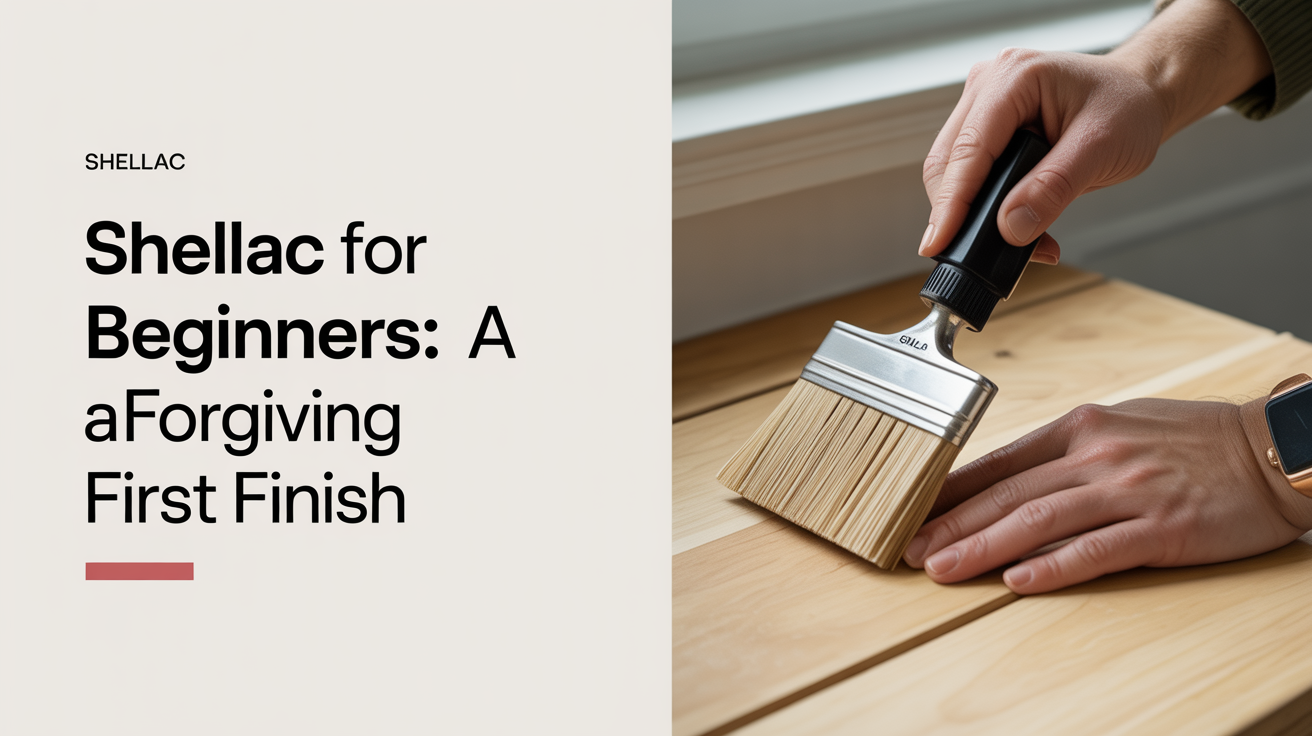
Shellac is one of the most beginner-friendly finishes in the shop: it goes on thin, dries fast, and any mistake can be fixed with a bit of denatured alcohol. Here is exactly how to apply it.
Why Shellac Is a Good First Finish
Most finishing products are unforgiving. Polyurethane traps brush marks under a hard film. Oil-based varnish stays tacky for hours and collects dust. Shellac behaves differently because it re-dissolves in its own solvent. If you put on too thick a coat, wipe it off with a rag dampened with denatured alcohol and start again. The finish literally repairs itself between coats because each new layer partially melts into the one beneath it.
Shellac also dries quickly, typically tack-free within 15 to 30 minutes at room temperature, so you can recoat several times in a single afternoon. It produces a warm amber tone on wood, which suits furniture, small boxes, and most woodworking projects well.
The main limits worth knowing up front: shellac is not waterproof. A ring from a wet glass will leave a white mark. It also softens under alcohol, so it is not the right choice for a bar top or a dining table that gets wiped down with cleaning products. For a bookcase shelf, a jewelry box, or a side table that stays dry, it is excellent.
Waxed vs. Dewaxed Shellac
Shellac in flake form contains a small amount of natural wax. Pre-mixed cans like Zinsser SealCoat already have this wax removed. The distinction matters because wax prevents other finishes from bonding to the shellac film.
Waxed shellac works as a standalone finish and as a sanding sealer under more shellac, but nothing should go over it except more shellac. Use it when you plan to shellac all the way to the final coat.
Dewaxed shellac is compatible under nearly everything: oil-based varnish, water-based polyurethane, lacquer. If you want to use shellac as a sealer and then topcoat with something harder, dewaxed is the right choice.
For most beginners applying a full shellac finish, waxed flakes or pre-mixed amber shellac work fine. If you want to layer finishes, reach for dewaxed shellac specifically.
How to Apply Shellac Step by Step
Prepare the Surface First
Shellac magnifies any roughness in the wood. Before you open the can, sand the surface up through 180-grit and remove all dust. A well-prepared surface is the biggest factor in a clean result. See how to sand wood properly before finishing for a full walkthrough on getting the surface ready.
If the wood has been stained, make sure the stain is completely dry before you apply shellac. A wet stain sealed under shellac can bleed or stay soft. Details on getting an even base are covered in how to apply wood stain evenly.
Mix Your Cut
Shellac is sold either pre-mixed or as dried flakes you dissolve yourself. The concentration is measured in "cuts," meaning the number of pounds of shellac dissolved per gallon of denatured alcohol.
| Cut | Flakes per quart of denatured alcohol | Use |
|---|---|---|
| 1-lb cut | 2 oz by weight | Wash coats, sealing end grain |
| 2-lb cut | 4 oz by weight | General application, most projects |
| 3-lb cut | 6 oz by weight | French polish padding, final coat |
Pre-mixed cans are usually sold at a 3-lb cut. Thin them 1:1 with denatured alcohol to get roughly a 1.5-lb cut, which brushes and pads on more smoothly and is easier to control.
Flakes dissolve slowly. Add them to the alcohol, stir, and let them sit for several hours or overnight. Strain the mixed shellac through a fine mesh before use to remove any undissolved bits.
Choose a Tool: Brush or Pad
Brush application is the simpler method for flat surfaces and carved details. Use a good quality natural-bristle brush or a foam brush. Cheap bristle brushes shed hairs into the wet finish. Apply with long, overlapping strokes in the direction of the grain. Work quickly and avoid going back over a stroke once it has started to set, because the alcohol in the shellac will soften the film and drag it.
Pad application (the foundation of french polish basics) gives a smoother result with no brush marks. Make a rubber by folding a piece of cotton cloth into a flat-bottomed pad, then wrapping it in a clean, lint-free cotton cover. Charge the pad by adding a small amount of shellac to the interior cloth, then press it against the back of your hand to spread the shellac evenly through the face. The pad should glide, not drag, and should leave a thin, even film.
Work the pad in straight strokes with the grain, then in wide figure-eight or circular motions to blend, then finish with straight strokes again. A drop of mineral oil on the pad face helps it glide without sticking on the upswing. Wipe the mineral oil off the final coat with a clean pad dampened with denatured alcohol.
Build Up Coats
Thin coats are the rule. Three to five thin coats produce a better result than two thick ones. Thick coats run, drag, and take much longer to cure fully.
Between coats, scuff lightly with 320-grit or 0000 steel wool to knock down any raised grain or dust nibs. Wipe off all dust before the next coat. The finish will feel smoother with each pass.
After the final coat, let the shellac cure for at least 24 hours before buffing or waxing. A coat of paste wax rubbed out with a soft cloth adds a subtle sheen and a small amount of water resistance.
Common Problems and Fixes
Cloudiness or bloom: Caused by moisture in the air or wood, or by applying shellac over a damp surface. Sand back to bare wood and reapply in drier conditions.
Sticky finish that won't dry: Usually from shellac that is too old. Shellac mixed from flakes has a shelf life of roughly six months. Pre-mixed cans degrade over time too. Check the date on the can. Discard and remix fresh if it stays tacky.
Brush drag and torn surface: The shellac is setting up before the brush stroke finishes. Thin the shellac slightly and work faster. Lower ambient temperature also slows the dry time and gives you more open time.
White ring after water contact: Let the area dry completely, then rub gently with 0000 steel wool and a touch of paste wax. Mild water marks often buff out. Deep ones may need a light re-coat with thinned shellac after sanding back.
Bubbles in the film: Usually from shaking the can or overworking the brush. Pour shellac rather than shake it, and use long smooth strokes without scrubbing.
How Shellac Compares to Other Clear Finishes
Shellac sits in a specific spot among finishing options. Unlike oil finishes such as tung, linseed, and danish oil, which penetrate the wood and cure by oxidation, shellac builds a surface film that sits on top of the wood. Oil finishes are easier to apply but offer less protection and a flatter sheen. Shellac builds faster and produces a more polished look, but requires more coats for good film thickness.
The tradeoff compared to polyurethane is durability. Polyurethane is harder and more water-resistant, but much less forgiving to apply and difficult to repair. For shop projects, gifts, and furniture that lives away from water, shellac is a practical choice that most beginners can apply well on the first try.
Frequently Asked Questions
Can I use shellac from a hardware store can rather than mixing from flakes? Yes. Pre-mixed amber shellac (Zinsser Bulls Eye is common) works well for most projects. Thin it about 1:1 with denatured alcohol for easier application. Check the date stamp on the can; old pre-mixed shellac goes bad and stays sticky. Mix from fresh flakes if you want maximum control over cut strength and freshness.
Do I need to sand between every coat of shellac? A light scuff with 320-grit or 0000 steel wool between coats gives a smoother result and helps each layer bond, but it is not strictly required. The solvent in each new coat re-melts the previous one, so adhesion is not the concern. Sanding removes dust nibs and smooths any raised grain so the final surface feels cleaner.
What is french polish and is it the same as shellac? French polish is a technique, not a product. It uses shellac applied with a cloth pad in many thin layers, building up a high-gloss film through repetitive rubbing. The product is shellac; the method is french polish. The basics described in this article using a pad are the foundation of that technique. True french polish takes practice to master, but the beginner version produces very good results without special tools.
Is shellac food-safe once cured? Cured shellac is considered food-safe by the FDA and is used to coat candies, citrus fruits, and pharmaceutical tablets. Once the alcohol has fully evaporated and the film is hard, it is non-toxic. Let it cure fully (at least 24 hours, ideally 48) before contact with food surfaces.
Can I apply shellac over an existing finish? Shellac bonds poorly to oily finishes like danish oil or teak oil. If the surface has been oiled, wait several weeks for the oil to fully cure, then test adhesion on a hidden spot before committing. Over bare wood, over stain, or as a first coat on bare wood before a topcoat, shellac performs well. Avoid applying it over wax, which prevents adhesion of any finish.