Hand Tools
The Block Plane: What It's For and How to Use It
Learn how to use a block plane for trimming end grain, chamfering edges, and fitting joints. A practical guide for beginners.
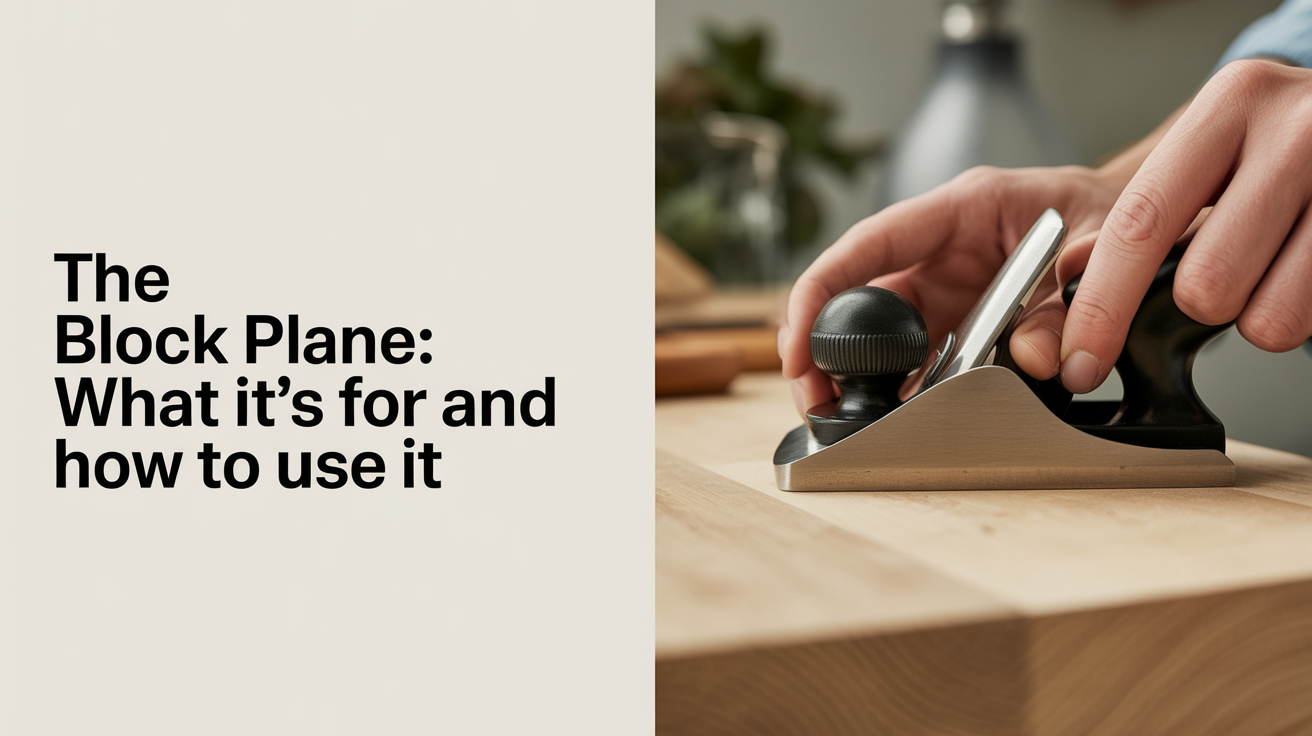
A block plane is a small, one-handed plane used mainly for trimming end grain, breaking sharp edges, and fitting parts together before assembly. Once you understand the setup and grain direction, it becomes one of the most-reached-for tools on the bench.
At a Glance
- A block plane beds its blade bevel-up at a low angle (12 or 20 degrees), which lets it slice end grain far more cleanly than a standard bevel-down bench plane.
- Low-angle (12°) and standard-angle (20°) block planes both land at roughly the same 37 to 38 degree effective cutting angle with a typical 25-degree bevel.
- The five jobs it does best: trimming end grain, chamfering edges, fitting joints, cleaning up glue lines, and knocking sharp arris corners off freshly cut edges.
- A dull blade, a wide mouth opening, or too deep a cut are the three most common causes of chatter and tearout. Fix sharpness first.
- Backing the far edge of end-grain work with scrap, or pre-chamfering it, prevents the blowout that trips up most beginners.
- One plane is enough for years. Add a second only once you're regularly fighting figured or reversing grain.
What a Block Plane Is (and How It Differs from a Bench Plane)
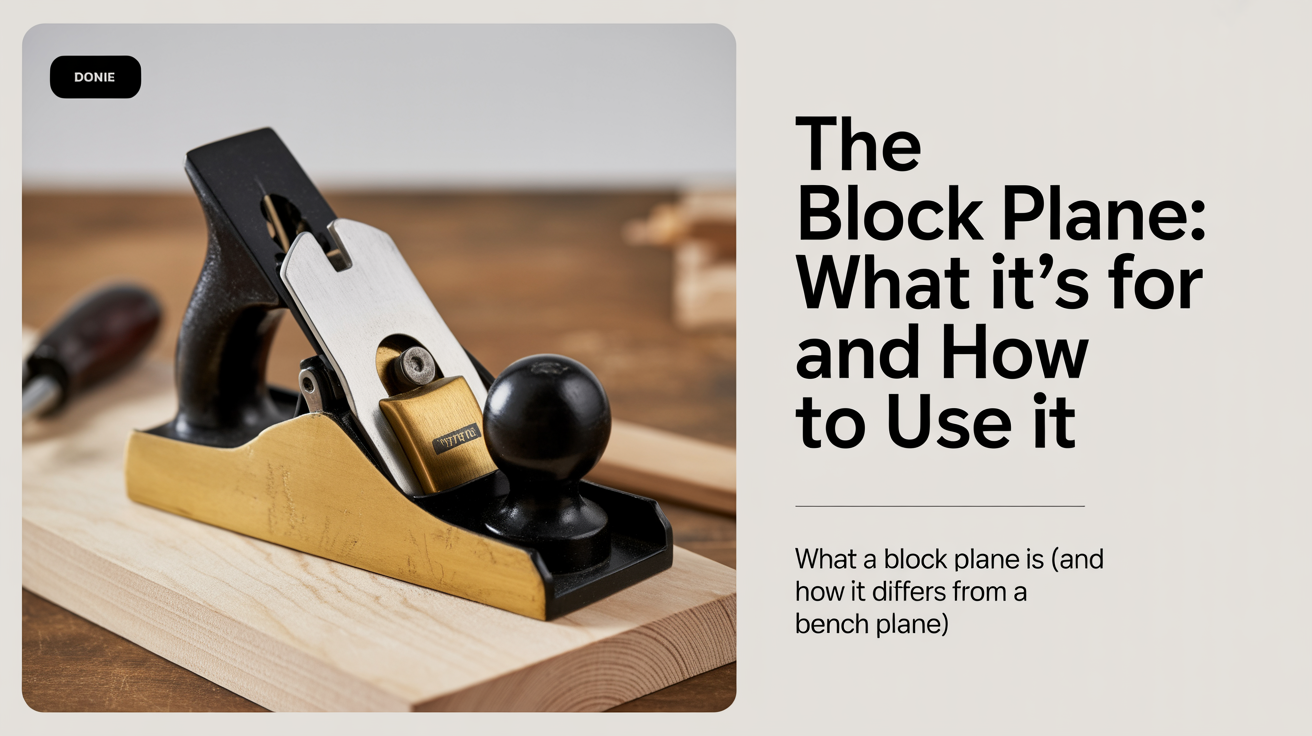
Most woodworking planes have the blade bedded bevel-down at around 45 degrees. A block plane beds its blade bevel-up at a lower angle, usually 20 degrees on a standard model or 12 degrees on a low-angle version. Because the cutting angle is lower, the blade slices end grain more cleanly instead of tearing it. According to Lie-Nielsen's technical overview of block planes, most modern block planes bed their blades around 12 degrees, with a 25-degree bevel producing a 37-degree effective cutting angle, which the maker describes as ideal for end grain and general shop work.
Block planes are also compact, typically 6 to 7 inches long, and light enough to use with one hand. That makes them handy for small work: fitting a drawer, trimming a tenon cheek, or knocking a burr off a freshly cut board.
Two numbers come up constantly in block plane discussions:
- Standard angle: 20-degree bed, effective cutting angle around 37-38 degrees with a 25-degree bevel. Good for general work and chamfering long-grain edges.
- Low-angle: 12-degree bed, effective cutting angle around 37 degrees with a 25-degree bevel. The lower bed angle gives a bit more clearance under the blade and makes end grain work slightly easier.
For a first block plane, either works. The low-angle version is slightly more versatile if you plan to do a lot of end grain trimming.
| Configuration | Bed Angle | Bevel | Effective Cutting Angle | Best For |
|---|---|---|---|---|
| Low-angle block plane | 12° | 25° | ~37° | End grain, general use |
| Standard block plane | 20° | 25° | ~37-38° | General work, chamfers |
| Either, with a steeper secondary bevel | 12° or 20° | 33° | ~45° | Figured or reversing grain |
Honing a steeper secondary bevel, say 33 degrees instead of 25, raises the effective cutting angle to around 45 degrees without regrinding the whole edge. That extra angle helps in tricky, highly figured woods where a lower angle tends to tear.
What a Block Plane Does Best
Knowing the specific block plane uses helps you reach for it at the right moment rather than fighting against it.
Trimming End Grain
End grain is the exposed face you see when you crosscut a board. It planes cleanly with a sharp, low-angle blade, but it requires a couple of precautions to avoid blowout on the far edge. End grain cuts across the wood's fiber structure rather than along it, which is exactly why the lower bevel-up bed angle matters here: it shears through the fiber ends instead of levering them up and snapping them off.
Chamfering Edges
A chamfer is an angled flat cut along an edge, usually 45 degrees. Block planes cut chamfers quickly and more controllably than a router for many applications. You can feel the blade tracking the corner of the wood in a way that power tools cannot replicate.
Fitting Joints
A block plane shaves thin amounts from a tenon cheek, a door stile, or a drawer side so parts slide together with the right amount of fit. Because you can take extremely thin shavings, often a few thousandths of an inch per pass, you stay in control when you are close to final dimension.
Cleaning Up Glue Lines
After gluing a panel, a block plane removes squeeze-out and levels the joint before sanding. One or two passes usually does it.
Removing Sharp Arris Lines
Every sawn or machined edge has a slight burr and a sharp corner called an arris. A single light pass with a block plane rounds that edge just enough so it does not catch on your hand or start a splinter. This takes about two seconds per edge and makes a real difference in how a finished project feels.
How to Set Up a Block Plane
A block plane that is not set up correctly will chatter, tear, or refuse to cut at all. Run through these steps before you start.
Check the Blade for Sharpness
A dull blade tears wood instead of slicing it. If shavings are coming out crumpled or you feel resistance before the cut starts, sharpen first. The same method used for chisels applies here: flatten the back, then work the bevel through your sharpening sequence. The guide at sharpening chisels: a simple repeatable method covers the progression in detail and translates directly to plane blades.
Set the Mouth Opening
Most block planes have an adjustable mouth, controlled by a small lever or knob near the toe. A tight mouth (around 1/32 inch or less) reduces tearout and produces a better surface. A wider mouth, closer to 1/16 inch, lets thicker shavings pass through without jamming. For finish cuts and end grain, tighten the mouth. For removing material quickly, open it slightly.
Set the Blade Depth
Turn the depth adjuster until the blade barely projects below the sole. Hold the plane up to a window and sight down from the toe toward the heel. You should see the blade as a very thin dark line. If you cannot see it at all, the blade is retracted. If you see a wide gap, it is set too deep and will dig in. A well-tuned block plane taking a finishing pass produces a shaving you can nearly read a newspaper through, thin enough to curl on its own.
Check for Square
Look down the sole from the toe. The blade edge should be parallel to the sole. If one corner projects more than the other, the plane will cut a slight bevel across the board. Use the lateral adjustment lever (a small tab on most block planes) to level the blade.
How to Use a Block Plane on End Grain
End grain planing is where the tool earns its keep, but it requires a specific approach to avoid blowout.
Prevent blowout at the far edge. When you plane across end grain and reach the trailing edge, the blade exits with nothing supporting the wood fibers. They split off as a chip. There are two ways to handle this:
- Backer board method: Clamp or hold a scrap of wood tight against the far end of the workpiece. The blade exits into the scrap instead of into open air.
- Chamfer first, then plane: Take a couple of strokes to create a small chamfer at the far edge before you make full passes. Each full pass stops before it breaks out the chamfer, which you renew as needed.
Plane in one direction only. Unlike long grain, end grain does not have a preferred "with the grain" direction in the same way. But keep your strokes consistent and do not reverse mid-pass.
Use light passes. Take thinner shavings than you think you need. End grain planes best when the blade is barely set. If you feel resistance, back the blade off slightly and sharpen before assuming more pressure is the answer.
For more on reading grain direction and avoiding tearout in general, how to use a hand plane without tearout covers the principles that apply across all plane types.
How to Chamfer an Edge with a Block Plane
Chamfering edges is one of the most satisfying block plane uses because it is fast and looks clean without requiring layout tools.
For an approximate 45-degree chamfer: Hold the plane at roughly 45 degrees to the face of the board and ride the corner of the workpiece in the throat. After a few passes, look at the flat you are creating. If it is uneven, adjust your angle slightly. The width of the chamfer is controlled by how many passes you take, and most beginners settle into a consistent 1/8 to 3/16 inch chamfer after a bit of practice.
For a consistent chamfer on multiple parts: Mark a line with a marking gauge on both the face and edge of each board before you start. Plane until you reach both lines. This gives you repeatable chamfers across a set of parts, such as the legs of a table or the rails of a frame.
For long-grain edges: The block plane works here too, though a bench plane handles long runs more efficiently. For short pieces or end-grain edges, the block plane is the right call.
Block Plane Reference: Common Tasks at a Glance
| Task | Key Setup Note | Watch Out For |
|---|---|---|
| Trimming end grain | Tight mouth, very light cut | Blowout at trailing edge |
| Chamfering edges | Plane at 45 degrees to the corner | Uneven chamfer width |
| Fitting a drawer | Plane long grain, test fit often | Taking too much at once |
| Leveling glue joints | Normal depth, full-width passes | Grain reversal at the joint |
| Removing arris burrs | Barely set blade, one or two passes | Planing too deep and rounding the edge |
Frequently Asked Questions
Do I need both a low-angle and a standard block plane?
Not at the start. A low-angle block plane handles the widest range of tasks including end grain, and most beginners find one plane is enough for years. If you later do a lot of figured wood where tearout is a problem, a standard-angle plane with a toothed blade is worth considering. But that is well down the road.
My block plane keeps chattering. What is wrong?
Chatter usually means the blade is not clamped tightly enough, the blade is dull, or the cut is too deep. Check the cap iron screw first to make sure the blade assembly is locked. Then back the blade off and take a thinner shaving. If chatter persists with a fresh edge, the cap iron may not be seating flat against the blade back.
Can I use a block plane on plywood?
Yes, with a sharp blade. Plywood end grain is harder on edges than solid wood because the glue between layers is abrasive. Expect to sharpen more often. For trimming plywood edges flush, a sharp block plane beats a belt sander for control.
How is a block plane different from using chisels for the same tasks?
Bench chisels excel at paring joints, cutting into corners, and chopping out waste. A block plane is faster and more consistent when you need to remove material across a flat face, especially end grain, where a chisel would require paring strokes in multiple directions. The two tools complement each other rather than duplicate work.
How do I store a block plane so the blade stays sharp?
Set the blade so it retracts slightly below the sole before putting the plane down. Keep it on its side or in a dedicated tray so the blade does not contact the bench. A light coat of camellia oil or paste wax on the sole prevents rust and helps the plane slide more smoothly when you pick it up again.
Why does the plane skip over parts of the board instead of cutting evenly?
This usually means the sole isn't sitting flat on the work, often because the board itself is slightly cupped or the plane is being tipped forward or back mid-stroke. Keep even downward pressure on the toe at the start of the stroke and the heel at the end, and check that your board is supported flat on the bench without rocking.
Is a low-angle block plane worth the extra cost over a basic standard-angle model?
For most beginners, yes, if you're only buying one plane. The lower 12-degree bed gives you a small but real advantage on end grain, which is the job a block plane handles that other planes struggle with. If your budget only stretches to a basic hardware-store model, a well-tuned standard-angle plane will still do the job; the difference shows up mainly on demanding end-grain work.