Joinery
Wood Glue 101: Getting Joints That Actually Hold
A beginner's wood glue guide covering glue types, open time, clamping pressure, end grain sizing, and cleaning squeeze-out before finishing.
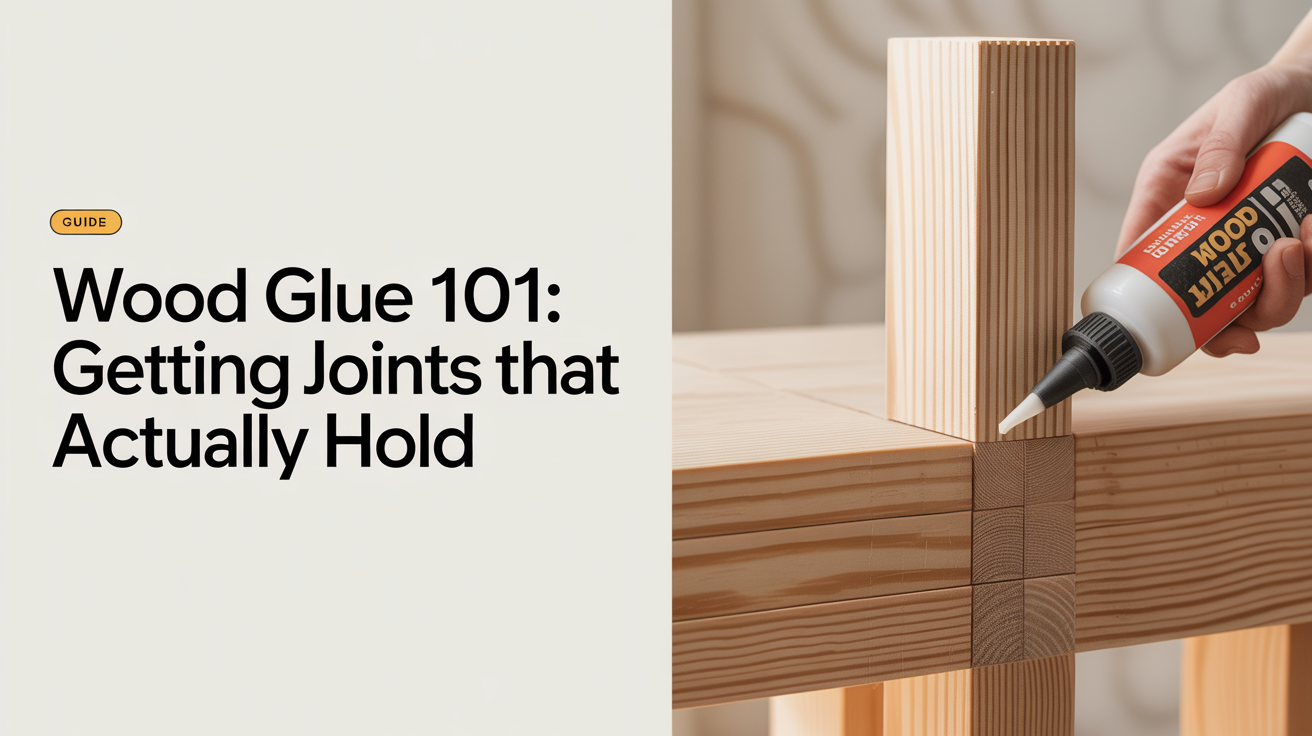
The right glue, applied correctly, will outlast the wood around it. The wrong glue, or the right glue used badly, gives you a joint that looks solid until the day it fails. Here is what you need to know to get it right from the start.
The Four Types of Wood Glue Worth Knowing
Most beginners reach for whatever yellow bottle is at the hardware store, and that works fine most of the time. But there are four adhesive families worth understanding, because each has a different job.
PVA and Yellow Glue
Yellow glue (aliphatic resin, sometimes called carpenter's glue) is the workhorse of the shop. Brands like Titebond Original, Titebond II, and Elmer's Carpenter's Wood Glue all fall here. It has a workable open time of five to ten minutes, sands without gumming, and cleans up with water. For most indoor furniture and cabinet work, yellow glue is the right choice. Titebond II adds water resistance for projects that may see moisture; Titebond III is fully waterproof for outdoor pieces.
Polyurethane Glue
Gorilla Glue is the name most people know. Polyurethane glue foams as it cures, which helps it fill small gaps, and it bonds wood to materials like metal or stone. The downsides: shorter open time, foamy squeeze-out that hardens like plastic, and it requires moisture to activate (mist one surface lightly before assembly). For standard wood-to-wood joinery, most woodworkers skip it in favor of PVA. It earns its place when you need a gap-filling bond or are joining dissimilar materials.
Hide Glue
Hide glue is the traditional choice, still used by furniture restorers and instrument makers. It comes as a hot liquid mixed from granules or as a ready-to-use formula like Old Brown Glue. Its key property is reversibility: heat and moisture release the joint cleanly, so antique repairs and instrument necks benefit from it. Clamping times are short once the glue chills, but the working window is also short. It is not the place to start, but it is worth understanding if you restore old pieces or build mortise and tenon joints meant to last generations.
CA Glue (Cyanoacrylate)
Thin CA glue is useful for locking small parts during dry assembly, stabilizing checks in wood, and reinforcing end grain on small projects. It sets in seconds, so repositioning is not possible once surfaces touch. Medium and thick CA are used in pen turning and small decorative work. For structural furniture joints, CA is not a substitute for PVA.
Open Time, Clamp Time, and the Difference Between Them
These two terms trip up a lot of beginners, so it helps to keep them straight.
Open time is the window between spreading glue and closing the joint. Once that window closes, the glue starts to skin over and bond strength drops sharply. If you apply glue and then spend ten minutes fiddling with clamps, you may be assembling a weak joint.
Clamp time (or cure time under clamps) is how long you need to hold the joint before it is safe to remove clamps and handle the piece. This is not the same as full cure. Most yellow glues reach enough strength to unclamp in one to two hours, but full strength takes twenty-four hours. Do not stress-test a freshly unclamped joint.
| Glue Type | Open Time | Clamp Time | Full Cure | Water Resistance |
|---|---|---|---|---|
| Yellow PVA (Titebond Original) | 5 min | 30-60 min | 24 hr | Minimal |
| Yellow PVA (Titebond II) | 5 min | 30-60 min | 24 hr | Good |
| Polyurethane (Gorilla Glue) | 15-20 min | 2 hr | 24 hr | Excellent |
| Hide Glue (hot) | 2-4 min | 15-30 min | 24 hr | Minimal |
| CA Glue (thin) | 5-10 sec | 30-60 sec | 10-15 min | Moderate |
Temperature and humidity affect all of these. Cold slows cure time and can prevent proper bonding below about 50°F. Hot weather shortens open time. If your shop is cold in winter or you are working outside, warm the wood and allow extra cure time.
Why End Grain Needs Sizing First
End grain is the cut face that exposes the hollow tubes running along the wood fiber. It absorbs glue the way a sponge absorbs water, pulling the adhesive deep into the fibers before it can bond the surface. The result: a starved joint that holds almost nothing.
The fix is sizing: apply a thin wash coat of glue diluted with water (roughly ten percent water to ninety percent glue) to the end grain, let it soak in for a minute or two, then apply a full coat of fresh glue and assemble. The first coat seals the pores; the second coat stays at the surface where it can actually form a bond.
This matters a lot in dovetail joints, where the tails and pins both have end grain faces that need to bond. Sizing those surfaces before final assembly is the step that separates joints that hold from joints that shake loose after a few seasons of seasonal wood movement.
Pocket hole joinery is a different case: the screw carries most of the load, so end grain absorption is less critical there, though adding glue still improves the joint.
Clamping Pressure: How Much Is Enough?
Too little clamping pressure and the joint starves because the glue layer is too thick. Too much pressure and you squeeze out all the glue, leaving a dry joint. The goal is a thin, even glue film across the entire mating surface.
For most softwoods and medium-density hardwoods, 100 to 150 psi of clamping pressure is the target. For dense hardwoods like maple and oak, 150 to 200 psi gives better results. In practice, most woodworkers learn this by feel: you want squeeze-out appearing along the full length of the glue line within a minute of closing the clamps, but not flooding out in thick ropes.
A few practical tips:
- Use enough clamps to keep the joint closed along its full length, not just at the ends. A long panel glue-up needs clamps every six to eight inches.
- Alternate clamps above and below a panel to prevent bowing under pressure.
- Cauls (flat scrap boards clamped across a joint) help distribute pressure evenly and prevent one side from bowing.
- Do a dry run before applying glue. If you cannot close the joint cleanly with your clamps in two minutes without glue, you will not manage it with glue and a ticking open-time clock.
Dealing with Squeeze-Out Before You Finish
Glue squeeze-out that gets missed before finishing is one of the most common beginner frustrations. Dried PVA glue seals the wood surface, so stain, oil, and water-based finishes will not penetrate those spots. You end up with light, glossy patches exactly where you do not want them.
There are two reliable approaches.
Let it cure, then scrape or chisel it off. Partially cured glue (the consistency of a soft rubber eraser, roughly thirty to forty-five minutes after clamping) peels off cleanly with a sharp chisel or a card scraper. Wiping wet PVA with a damp cloth feels satisfying but spreads a thin film of diluted glue over a wider area, which causes the same blotching problem in a less obvious form.
Use a glue-friendly finish plan. If you are applying a film finish like polyurethane or lacquer rather than a penetrating oil, you have more margin. The film finish coats over dried glue without the blotching you get with stain. Still, removing dried squeeze-out before finishing is faster and cleaner than working around it.
For glue joints in painted work or projects that will not be stained, wet cleanup with a damp rag is fine. The blotching problem only matters when you plan to stain or use a penetrating oil like tung oil or Danish oil.
Frequently Asked Questions
Is one brand of wood glue actually better than another?
For most shop work, any quality yellow PVA does the job. Titebond is the most recommended because it is consistent, widely available, and has published strength and water resistance data. Off-brand PVA can vary between batches. If you are starting out, Titebond II is a reasonable first bottle: it handles indoor furniture and projects that may see occasional moisture.
How do I know if a glued joint actually failed or if the wood split?
Look at the break. If you see wood fiber on both faces of the failure, the glue bond was stronger than the wood and the wood itself let go. That is a good joint. If you see a clean, smooth glue film on both faces, the bond failed at the glue line, which usually means the joint was starved (too little glue or too much pressure), the open time was exceeded, or the surfaces had contamination like oil or finish.
Can I glue over old dried glue when doing a repair?
No, not reliably. Fresh PVA does not bond well to cured PVA. For a repair, you need to break the joint apart, scrape or sand all old glue off both surfaces until you reach bare wood, and re-glue from clean wood. This is one reason hide glue is popular for restoration work: heat and moisture release hide glue joints cleanly without damaging the wood.
How long should I leave clamps on before I continue working?
One hour is enough for most yellow glues at room temperature to allow light handling. Leave the piece undisturbed for at least twenty-four hours before any serious work like flattening, mortising, or routing near the glue line. The wood around the joint can shift as moisture from the glue equalizes, so waiting a full day prevents small alignment surprises.
Does cold glue from a winter shop affect bond strength?
Yes. Both glue and wood need to be above 50°F for a reliable cure. Cold glue is also thicker and harder to spread evenly. Bring glue inside the night before a winter glue-up and let cold lumber warm up in a heated space for a few hours first.